How radon is removed from a house
How is radon removed from a house?
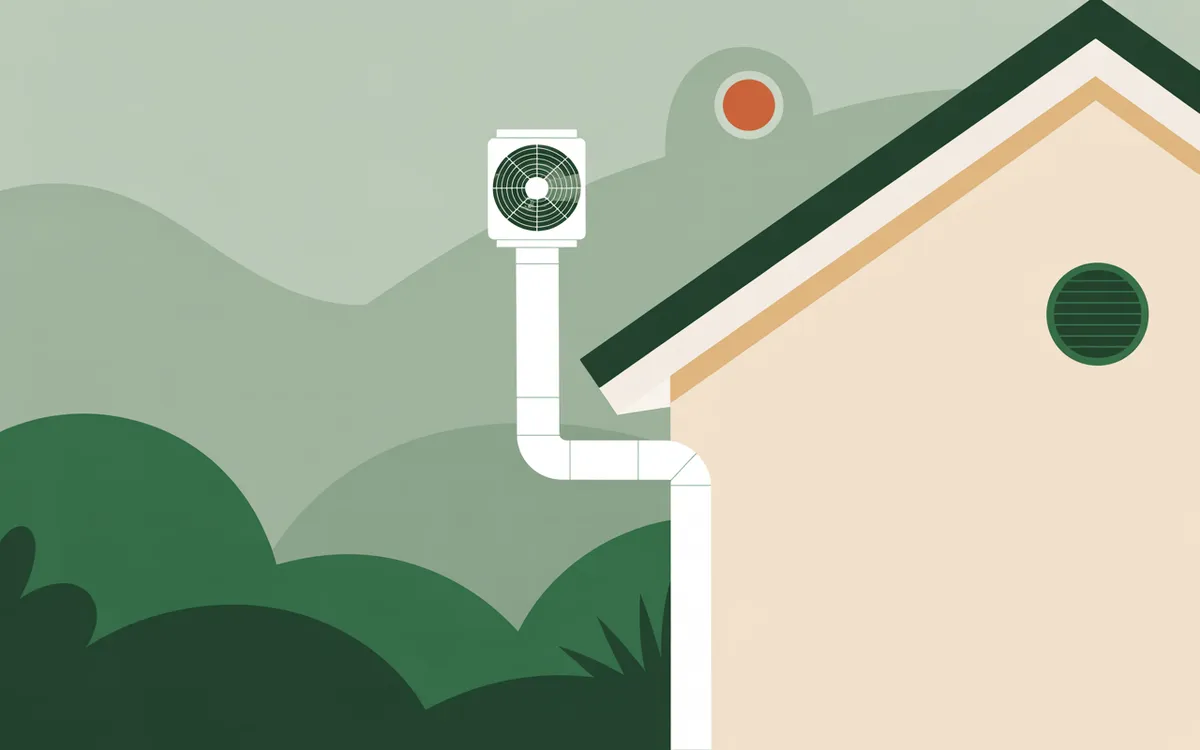
Most often with a pipe and a fan. PA DEP says over 99 percent of radon systems are subslab depressurization: a fan creates suction under the floor slab and sends the radon out above the roofline, where it spreads out.
DEP and EPA generally recommend methods that stop radon getting in, rather than ones that lower it after it's inside.
How does subslab suction work?
PA DEP describes it like this:
- One or more suction pipes go through the floor slab into the crushed rock or soil underneath. Often only one is needed.
- A radon fan on the pipe draws radon from under the house and releases it outdoors.
- The pipe must vent above the roof, 10 feet or more above the ground, and away from windows and doors.
- The fan must not sit in or below a lived-in area. It goes in an unoccupied attic, a garage or outside, never in a basement.
DEP says active subslab suction is the most common and usually the most reliable method. It typically cuts radon by 55 to 99 percent.
What about other foundations?
Drain tiles and sumps. If your house has drain tiles or a sump, the contractor may draw from those instead. DEP says a sump can be capped so it still drains water.
Hollow block walls. Block wall suction pulls radon from inside the blocks, often alongside subslab suction.
Crawlspaces. DEP says the most effective method is covering the earth floor with a high-density plastic sheet and drawing radon from under it with a pipe and fan. This is called submembrane suction. It typically cuts radon by 50 to 99 percent.
PA DEP says it is common to have a basement under part of a house and a slab or crawlspace under the rest. Those houses may need a combination of methods.
How does a contractor choose?
DEP says the contractor inspects your house and may run diagnostic tests. One uses chemical smoke to see where air moves. Another, a soil communication test, uses a vacuum cleaner and smoke to see how easily air moves under the slab. What they find decides the design.
What should the finished system have?
DEP's checklist for a subslab system:
- A radon test after mitigation, with the results given to you
- A pipe that discharges above the edge of the roof
- A fan in an attic, a garage or outside the building shell
- A gauge on a pipe to show the system is working
- A label with the installer's name, phone number and DEP certification number
- An information packet attached to the system
- Accessible basement cracks caulked and sealed
Find a certified mitigation company serving York County, and read what happens after it's installed.
What do people ask?
Do air purifiers or sealing cracks get rid of radon?
Sealing alone doesn't. PA DEP and EPA don't recommend sealing by itself, because it hasn't been shown to lower radon significantly or consistently. DEP's guide doesn't list air purifiers as a radon reduction method.
Source: PA DEP: Pennsylvania Consumer's Guide to Radon Reduction, checked September 26, 2026Does opening windows reduce radon?
Only for a while. PA DEP says more ventilation can lower radon, but once windows, doors and vents are closed, levels usually return within about 12 hours. DEP treats it as a temporary approach only.
Source: PA DEP: Pennsylvania Consumer's Guide to Radon Reduction, checked September 26, 2026Should I fix radon myself?
PA DEP recommends a certified contractor, because without the right equipment or knowledge you could raise your radon level or create other hazards. Pennsylvania law lets you work on your own home without being certified.
Source: PA DEP: Pennsylvania Consumer's Guide to Radon Reduction, checked September 26, 2026Does finishing a basement change radon levels?
It can. PA DEP says to test a basement for radon before converting it into living space, include radon-resistant techniques if there's a problem, and test again after the work is done.
Source: PA DEP: Pennsylvania Citizen's Guide to Radon (2900-BK-DEP0375), checked September 26, 2026Where does this come from?
Source: PA DEP: Pennsylvania Consumer's Guide to Radon Reduction, checked September 26, 2026
Source: PA DEP fact sheet: Radon Mitigation Systems (2940-FS-DEP4430), checked September 26, 2026
Source: PA DEP: Pennsylvania Citizen's Guide to Radon (2900-BK-DEP0375), checked September 26, 2026